
[fusion_builder_container hundred_percent=”yes” overflow=”visible” type=”legacy”][fusion_builder_row][fusion_builder_column type=”1_1″ layout=”1_1″ background_position=”left top” background_color=”” border_color=”” border_style=”solid” spacing=”yes” background_image=”” background_repeat=”no-repeat” padding_top=”” padding_right=”” padding_bottom=”” padding_left=”” margin_top=”0px” margin_bottom=”0px” class=”” id=”” animation_type=”” animation_speed=”0.3″ animation_direction=”left” hide_on_mobile=”no” center_content=”no” min_height=”none” align_self=”flex-start” border_sizes_undefined=”” first=”true” last=”true” hover_type=”none” link=”” border_position=”all”][fusion_tagline_box backgroundcolor=”” shadow=”yes” shadowopacity=”0.5″ border=”0″ bordercolor=”” highlightposition=”top” link=”” linktarget=”_self” buttoncolor=”” button=”” title=”What If You Could Generate Heat From Thin Air?” description=”Well now you can. What’s more, you can save money and reduce your carbon footprint in the process. Read below and discover how you could be saving a pretty penny on your energy bills by generating heat from thin air. Even cold thin air!” animation_type=”bounce” animation_direction=”down” animation_speed=”1″ /][fusion_text columns=”” column_min_width=”” column_spacing=”” rule_style=”” rule_size=”” rule_color=”” hue=”” saturation=”” lightness=”” alpha=”” content_alignment_medium=”” content_alignment_small=”” content_alignment=”” hide_on_mobile=”small-visibility,medium-visibility,large-visibility” sticky_display=”normal,sticky” class=”” id=”” margin_top=”” margin_right=”” margin_bottom=”” margin_left=”” fusion_font_family_text_font=”” fusion_font_variant_text_font=”” font_size=”” line_height=”” letter_spacing=”” text_transform=”” text_color=”” animation_type=”” animation_direction=”left” animation_color=”” animation_speed=”0.3″ animation_delay=”0″ animation_offset=””]
 What Is An Air Source Heat Pump?
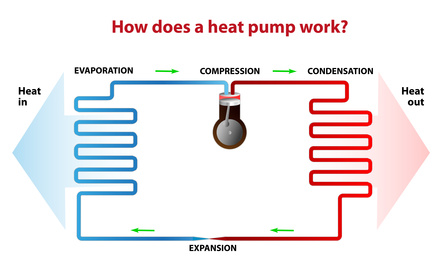
An air source heat pump takes heat from the air and passes it through a heat pump to raise its temperature. See the diagram to the right.
The heat pump is usually located outside your property. The heat produced is then used in your heating system. A heat pump can be used with central heating, underfloor heating or a warm air convector.
An air source heat pump is a low carbon solution. It uses electricity and is designed to reduce heating costs. With the right advice, a heat pump can be a good addition to your energy saving arsenal.
How Much Will An Air Source Heat Pump Save Me?
The energy saving trust estimates that an air source heat pump could save between £150 and £530 per year. These figures are based on an average home but there are quite a few consideration to be made before a reasonably accurate assessment can be made.
Savings will depend on a number of factors but the general rule of thumb is that the biggest savings would be made if you have an electric heating system. Good savings can also be made with an oil heating system. DRC Renewables strongly recommend that you seek advice if you have gas central heating. There are some other things to consider like radiator size and your EPC band to name just a couple.
An air source heat pump can be a very good move but it does pay to do your homework or get expert advice before you install one. Fill out the form to your right if you would like some help with air source heat pumps.
Are There Government Incentives For Air Source Heat Pumps?
The government Boiler Update Scheme (BUS) currently offers up to £7,500 to eligible households if you are replacing a boiler with a heat pump. To learn more, please feel free to give us a call. We will be happy to guide you in the right direction.
[/fusion_text][/fusion_builder_column][/fusion_builder_row][/fusion_builder_container]